


If you’re running a stamping, forming, or precision manufacturing operation, a H-Frame High Speed Press is basically your workhorse. It’s built for high-volume, tight-tolerance jobs—think automotive component stamping, electronic part forming, or appliance manufacturing—and when it runs smooth, your line keeps moving, deadlines get hit, and profits stay on track. But if you’ve ever dealt with one of these presses acting up mid-run (like random misfeeds, weird vibrations, or unexpected downtime that eats into your shift), you know how stressful that gets. As a supplier of these presses, I’ve helped dozens of troubleshooters and shop managers fix recurring issues, and most problems aren’t actually about the machine being broken—they’re about missing small, consistent steps that keep it on track. Today I’m breaking down the real, actionable things you can do to make sure your H-frame high speed press runs 24/7 (well, within reason) without surprises.
First, let’s start with what makes H-frame presses different from other high speed presses, because that’s where a lot of new owners mess up. Unlike a C-Frame High Speed Press, which has an open-sided frame for easier access to parts, H-frames are dual-sided, boxier, and way more rigid—perfect for high-tonnage jobs at high speeds, but that rigidity means even a tiny imbalance can throw everything off. And it’s not the same as a Knuckle Joint High Speed Press, which uses that toggle joint for extra force at the bottom of the stroke; H-frames rely on a straight crank mechanism that’s simpler but needs more consistent maintenance to keep it smooth. A lot of guys I work with mix up these designs, and that leads to setting maintenance schedules that are way too loose (or way too tight) for their machine. The first rule: know your press inside and out, not just as a High Speed Press Machine label, but specifically the H-frame model you have.
Let’s get into daily checks, because this is the low-hanging fruit that almost everyone skips. I tell every shop I work with to do a 10-minute “walkaround” before each shift, no exceptions. Skip this, and you’ll be surprised how often a loose bolt, a leaking seal, or a dirty sensor causes a breakdown. Here’s what to actually check, not just the generic list in the manual: First, the frame’s side bolts. H-frames take tons of lateral force every stroke, and those 8–12 bolts holding the two sides together will vibrate loose over time. Don’t just glance at them—grab a wrench and give each a ¼ turn. If it moves, mark it with a paint pen so you can check it again next shift. Next, the lubrication system. H-frames have way more moving parts than C-frames: crank bearings, slide guides, connection rods, even the clutch and brake. A lot of people just top off the oil reservoir once a week, but that’s not enough. You need to check the flow meter on the lubricator every day—if the oil isn’t hitting every part, not only will parts wear faster, but weird friction will cause the press to skip strokes, which ruins parts. Also, wipe down the proximity sensors on the slide and die area. Those tiny sensors that tell the press where the die is? They get covered in metal shavings, and suddenly the press thinks the slide is ½ inch off, so it stops dead. I’ve seen this cause a 2-hour shutdown on a 1,000-ton H-frame over a sensor full of aluminum dust—stupid, but avoidable.
Then there’s preventive maintenance (PM) that’s not on the “standard” schedule. The manual will tell you to change oil every 6 months, but if you run your press 24/7 (no weekends off), you need to cut that to every 3 months. I see this all the time: a shop runs the press at max speed 16 hours a day, waits for the manual’s 6-month oil change, and then the bearings wear out because the oil got too contaminated with metal particles. Another big one: the clutch and brake adjustment. H-frame high speed presses run at like 300–500 strokes per minute, so the clutch has to engage and disengage super fast. If the gap between the clutch plates gets too big, it slips, which causes uneven strokes and makes the whole press vibrate. I recommend checking this every 2 weeks—you can do it while the press is on idle, no need to take it apart. And don’t forget the die set alignment. This is a huge one for H-frames, because their rigidity means if the die is even slightly off, it’ll push unevenly on the frame, leading to stress cracks over time. Most shops do a die alignment when they first install the die, but when you switch to a different job, or even if you run the same die for 10,000 parts, the die bolts can loosen. A quick check with a dial indicator before you start a new run will save you from thousands of bad parts and a damaged press.
Now, the stuff that’s easy to miss: operator training and load management. I can’t tell you how many times an operator will crank the press to 550 strokes per minute when it’s rated for max 500, just to get the job done faster. Yeah, it might work for an hour, but after that, the bearings start heating up, the frame starts twisting, and suddenly you’re replacing a $2,000 bearing because someone wanted to save 10 minutes. Operators need to know the actual specs of their specific H-frame high speed press, not just the general “high speed” label. Also, load management: don’t run a 600-ton H-frame at 500 tons every job. The frame is built to handle that, but it wears it out way faster than running at 70% load. I had a customer who ran his press at 90% load for every automotive stamping job, and after 2 years, the frame had a tiny stress crack. He ended up paying 3x more to repair it than if he’d run it at 70% and scheduled an extra die change. And operator training isn’t just about specs—teach them to listen. H-frames make a distinct “hum” when everything’s good. If they hear a high-pitched squeal, a rattle that wasn’t there before, or the press feels “bouncy” instead of solid, they need to hit the stop button immediately, not wait for the error code. A lot of modern high speed presses have sensor error codes, but some issues (like loose frame bolts) don’t trigger a code until it’s too late.
Then there’s the monthly deep dive that no one talks about. Every month, schedule 4 hours to do a more thorough check: inspect the crankshaft for wear marks on the bearings, check the slide’s gibs for looseness, and test the vibration levels. You can get a cheap vibration meter online for $50, or even use a smartphone app (there are decent ones that work for this) — just hold it against the frame when the press is running at max speed. If the vibration is way higher than it was the last month, that’s a sign something’s off. I had a customer who caught a worn crank bearing this way—vibration spiked from 0.5 g to 1.8 g in a month. If he’d waited until the quarterly PM, he’d have had a catastrophic failure that shut him down for a week. Also, don’t ignore the electrical components. H-frame high speed presses have a ton of wiring for the sensors, clutch controls, and variable speed drives. Every month, check the wiring connections for any loose terminals—vibration from the press will loosen them, and a loose wire can cause random stops that make you think the whole press is broken. I’ve even seen mice chew through wiring in a shop with bad pest control, so a quick visual check of the wiring harnesses is worth 5 minutes.
Wait, let’s talk about dealing with downtime when it does happen. Even with all the checks, stuff will break—no machine runs forever. The key is not panicking, and having a spare parts kit on hand. As a supplier, we tell every customer to keep a spare set of crank bearings, a lubrication filter, and a set of frame bolts specific to their H-frame model in the shop. Nothing’s worse than waiting 3 days for a $50 bearing when your press is down and you’re missing a deadline. Also, keep a log of every issue: when it happened, what you fixed, what the root cause was. After a few months, you’ll start noticing patterns—like every time you run a shiny new die, the sensor gets dirty after 5,000 parts, or the clutch adjustment needs to be checked after every die change. That log is way more useful than any manual, because it’s specific to your press and your shop’s operating style.
And let’s be real, no one wants to be stuck troubleshooting in the middle of the night. That’s why picking the right machine in the first place helps, too. Not all H-frame high speed presses are created equal—some are built for light, high-speed jobs, others for heavy tonnage. If you’re stamping 1-inch thick steel, a light-duty H-frame will give you all kinds of issues, even if you maintain it perfectly. When you’re shopping for a high speed press, don’t just go for the cheapest or fastest—look for one that’s sized for your actual jobs, and that has the features you need (like better sensor sealing, or a robust frame for high-tonnage runs). Our High Speed Mechanical Press line, for example, has H-frame models with reinforced side beams that cut down on lateral vibration, which means less wear over time. Compare that to a generic press that skimps on frame material to save money—you’ll spend way more on maintenance later.
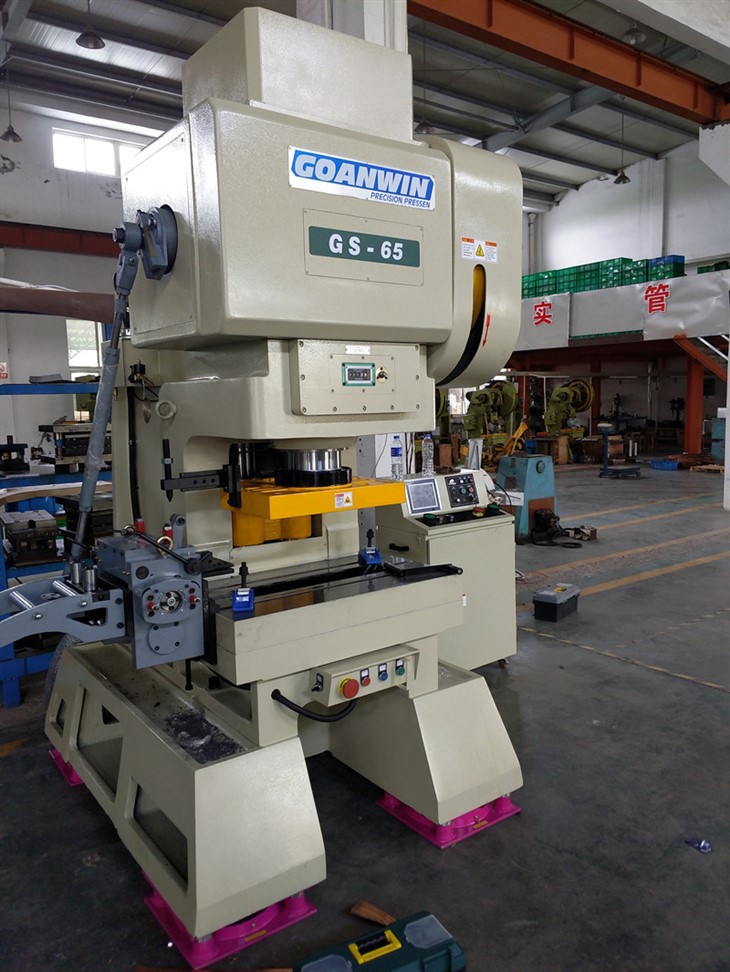

At the end of the day, the smooth operation of your H-frame high speed press isn’t magic. It’s small, consistent steps: daily walkarounds, targeted PM, listening to your operators, tracking issues, and picking the right machine for your needs. Skipping the 10-minute daily check might save you 10 minutes in the morning, but it’ll cost you 2 hours in downtime later. Ignoring the vibration log might let you hit a deadline this week, but it’ll lead to a $10,000 repair bill next quarter. If you’re in the market for a new press or have questions about optimizing the one you have, we’re here to help—we don’t just sell these machines, we work with shop managers every day to keep their lines running smooth. Reach out to us to discuss your needs, and we’ll help you figure out exactly what press (or maintenance plan) works for your operations.
References
- Society of Manufacturing Engineers. (2021). Preventive Maintenance for High Speed Forming Presses. SME Press.
- Machine Design Magazine. (2022). “Vibration Analysis for Press Machinery: Avoiding Catastrophic Failure.” Machine Design, Penton Media.
- International Organization for Standardization. (2020). Safety Requirements for Mechanical Presses, Part 1: General Requirements. ISO 12100:2020.


